
The wait is almost over for the Class of 2024. The Department of Basic Education (DBE) is set to release the 2025 Matric Results shortly, marking a major milestone for thousands of students across South Africa. Whether you are looking for your NSC (National Senior Certificate) or IEB scores, the anxiety of waiting can be overwhelming.
To help you stay ahead, this guide provides all the official platforms, including direct website links, SMS codes, and USSD prompts, to access your results the moment they go live. Below, we have summarized everything you need to know about the Matric Results 2025 release.
Matric Results 2025: Quick Facts Table
Matric Results 2025: Quick Facts Table
| Feature | Details |
| Exam Authority | Department of Basic Education (DBE) / IEB |
| Academic Year | 2025 / 2026 |
| Official Release Date | Expected January 2026 |
| Official Website | www.education.gov.za |
| Access Methods | Online Portal, SMS, USSD, and Local Newspapers |
| Result Type | National Senior Certificate (NSC) |
How to Check Matric Results 2025 (Step-by-Step)
Checking your results can be stressful if the official websites become slow due to high traffic. We recommend familiarizing yourself with these four official methods to ensure you get your statement of results as soon as they are released.
Method 1: The Official DBE Website (Best for Full Statements)
The Department of Basic Education (DBE) portal is the primary source for NSC results. This method allows you to see your individual subject marks.
- Visit the Website: Go to the official DBE home page at www.education.gov.za.
- Navigate to the Matric Link: Look for the prominent link or banner titled “2025 NSC Exam Results” (released in 2026).
- Enter Your Details: You will be prompted to enter your Examination Number (13 digits). Ensure there are no spaces or typos.
- Verification: Some years, the portal requires additional personal details (like your ID number) to verify your identity.
- Download and Print: Once your results appear, click the “Download” button. It is highly recommended to save a digital PDF copy and print a hard copy for university or college applications.
Method 2: Using the MatricsMate App (Best for Mobile Users)
The SABC, in partnership with the DBE, offers the MatricsMate App, available on the Google Play Store and Apple App Store.
- Download: Search for “MatricsMate” and install the app before the release date.
- Registration: Register using your Examination Number and contact details.
- Instant Notification: Once results are officially live, the app will send a push notification directly to your phone with your status.
Method 3: Check via SMS (Easiest for Low Data)
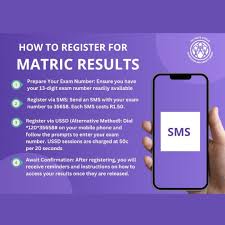
If you are in an area with poor internet connectivity, the SMS service is the most reliable fallback. Note that a one-time registration fee (usually R1.50) applies.
- Compose a Message: Create a new SMS.
- Enter Your Information: Type your Examination Number followed by your ID Number.
- Send: Send the SMS to 35658.
- Confirmation: You will receive a confirmation message. Once the results are released, you will receive an automated SMS with your result summary.
Method 4: USSD Service (Fastest Interactive Method)
The USSD service is an interactive menu that works on even the most basic mobile phones.
- Dial the Code: On your phone’s keypad, dial *120*35658#.
- Follow the Prompts: The system will ask you to enter your Examination Number and ID Number.
- View Status: Once validated, your results will be displayed on the screen subject-by-subject.
- Note: Standard USSD rates apply.
Understanding Your Results: Matric Pass Levels Explained
In South Africa, passing your Matric isn’t just about a “Yes” or “No.” The type of pass you achieve determines which higher education institutions (Universities, Technikons, or TVET Colleges) you are eligible to apply to.1
Here is a deep dive into the four levels of achievement:
1. Bachelor’s Degree Pass (Formerly “University Exemption”)2
This is the highest level of achievement in the NSC. It allows you to apply for a Degree program at any university in the country.
- Requirements:
- Pass at least four subjects at 50% (Level 4) or higher.3
- Pass your Home Language at 40% or higher.4
- Pass two other subjects at a minimum of 30%.5
- What it means: You have the academic foundation to handle the rigors of a four-year degree. Note that specific high-demand courses (like Medicine or Engineering) may require much higher percentages than these minimums.
2. Diploma Pass
A Diploma pass allows you to apply for Diploma programs at Universities of Technology (Technikons) and various TVET Colleges.6
- Requirements:
- Pass at least four subjects at 40% (Level 3) or higher.
- Pass your Home Language at 40% or higher.
- Pass three other subjects at a minimum of 30%.
- What it means: This is a solid result that opens doors to many professional qualifications in fields like Nursing, Business Management, or Information Technology.
3. Higher Certificate Pass
This level allows you to apply for Higher Certificate programs at colleges and certain higher education institutions.
- Requirements:
- Pass your Home Language at 40% or higher.
- Pass two other subjects at 40% or higher.
- Pass three other subjects at 30% or higher.
- What it means: Higher Certificates are excellent bridging courses. If you achieve this pass, you can complete a one-year certificate and, upon completion, potentially upgrade to a Diploma or Degree track.
4. NSC Pass (Senior Certificate)
This is the basic requirement to be considered a high school graduate.
- Requirements:
- Pass at least three subjects at 40% (one must be your Home Language).
- Pass at least three other subjects at 30%.
- What it means: While you may not meet the minimum entry requirements for a Degree or Diploma immediately, you have officially finished school. This level is often sufficient for entry-level jobs or specific vocational training at TVET colleges.7
The 1–7 Level System (The Rating Scale)
When you look at your statement of results, your performance for each subject is ranked from Level 1 to Level 7:
| Level | Percentage | Achievement |
| 7 | 80 – 100% | Outstanding Achievement8 |
| 69 | 70 – 79%10 | Meritorious Achievement11 |
| 512 | 60 – 69%13 | Substantial Achievement14 |
| 415 | 50 – 59%16 | Adequate Achievement17 |
| 318 | 40 – 49%19 | Moderate Achievement20 |
| 221 | 30 – 39%22 | Elementary Achievement23 |
| 124 | 0 – 29%25 | Not Achieved (Fail)26 |
Post-Result Roadmap: What to Do After Receiving Your Results
Receiving your results is just the beginning. Whether you achieved a Bachelor’s pass or didn’t get the marks you hoped for, there are specific legal and educational steps you should take immediately.
A. Applying for a Remark or Recheck
If your final marks are significantly lower than your school-based assessments (SBA), or if you are just a few percentage points away from a higher pass level, you have the right to appeal.
- Recheck: This is a lower-cost process where an official ensures that every question was marked and that the marks were added up correctly.
- Remark: This involves a different examiner reading and marking your entire exam paper again. This is more expensive but more likely to result in a grade change.
- Deadlines: Applications usually open immediately after results are released and close within 21 days.
- Fees: There is a set fee per subject, which is refunded only if your mark improves by a certain margin.
B. The “Second Chance” Matric Programme
If you failed your Matric or did not meet the requirements for the degree you want to study, the Department of Basic Education (DBE) Second Chance Programme is your best option.
- Who is it for? Students who want to improve their results or those who failed to meet the NSC requirements.
- What it offers: You can register to rewrite up to two subjects. The program provides free learning materials, online resources, and even face-to-face classes in certain districts.
- Registration: This usually happens at your local district office or online via the DBE website.
C. Upgrading Your Results
If you passed but want a “Bachelor’s Pass” instead of a “Diploma Pass,” you can register as a private candidate to upgrade specific subjects. This is common for students aiming for competitive fields like Medicine or Engineering who need to boost their Math or Science scores.
D. Managing Your Mental Health
The pressure of the Matric results can be overwhelming. It is important to remember that your results do not define your worth.
- Support Lines: If you or someone you know is feeling distressed, you can contact the SADAG (South African Depression and Anxiety Group) or the DBE’s toll-free helpline.
- Immediate Help: Reach out to your school counselor or a trusted adult to discuss your options. There is always a way forward.
E. Next Steps: NSFAS and University Registration
For those who have passed and are heading to higher education:
- Confirm Your Admission: Log into your university or college portal to confirm your final acceptance.
- NSFAS Status: If you applied for the National Student Financial Aid Scheme (NSFAS), check your portal to ensure your funding is approved based on your final results.
- Late Applications: Some TVET colleges and private institutions accept late applications in late January. If you haven’t applied yet, do so immediately.
Final Thoughts: Your Future Beyond the Results
Receiving your Matric Results 2025 is undoubtedly one of the most significant moments in your academic journey. Whether you are celebrating a Bachelor’s pass or considering a second chance through a rewrite, remember that this result is a stepping stone, not a final destination.
The Class of 2024 has faced unique challenges, and simply reaching this point is an achievement in itself. For those heading to university, the path is clear. For those who need to pivot, South Africa offers robust systems like TVET colleges and the Second Chance program to ensure no student is left behind.
📢 Join the Conversation!
We want to hear from you! How did the Class of 2024 perform at your school?
- Share Your Success: Did you get the pass level you were aiming for? Let us know in the comments below!
- Ask a Question: Are you confused about how to apply for a remark or NSFAS? Drop a comment, and our community will help you out.
- Help a Friend: Know someone still struggling to find their results? Share this guide on WhatsApp or Facebook using the buttons below to help them out.
Stay Updated: Don’t miss out on the official Form Five/University Selection dates. Follow us for real-time alerts on the next steps of your journey!